
Kranus Lutera - The therapy for voiding dysfunction.
An effective treatment to reduce the frequent urge to urinate, specifically aimed at noticeably relieving symptoms. Currently available in Germany and France.

Contents of the digital therapy.
With the 12-week Kranus Lutera program, you can specifically address the symptoms of frequent urination and achieve a noticeable improvement in your symptoms.
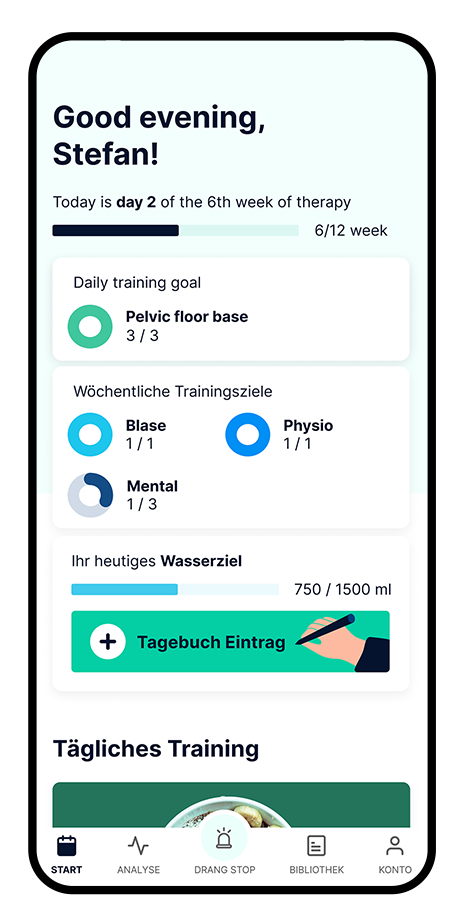
Personalized training
A training program that adapts to your feedback and individual needs, with exercises that vary in intensity and complexity
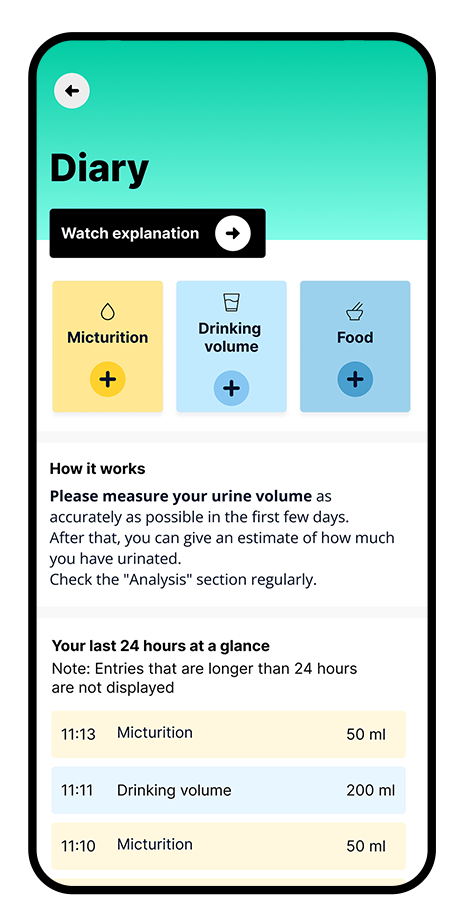
Micturition diary
The micturition diary documents urination patterns and thus helps you to cope with frequent urination
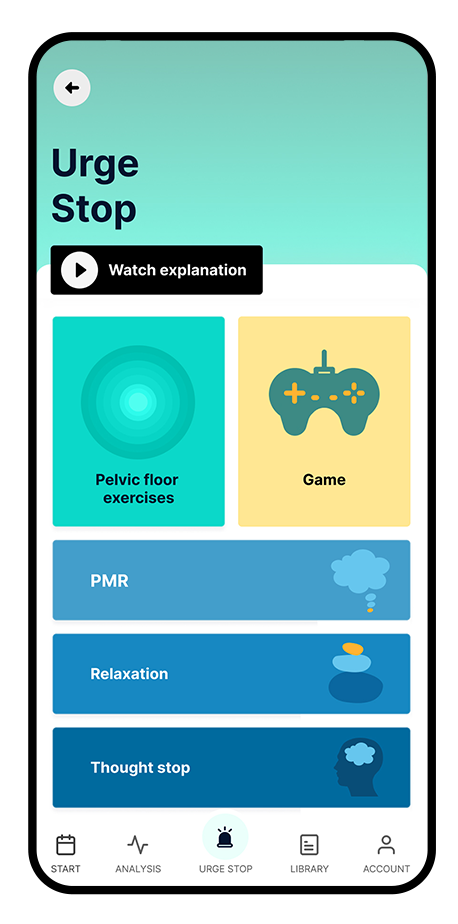
Urge stop
Learn to better control frequent urge to urinate by using urge control strategies
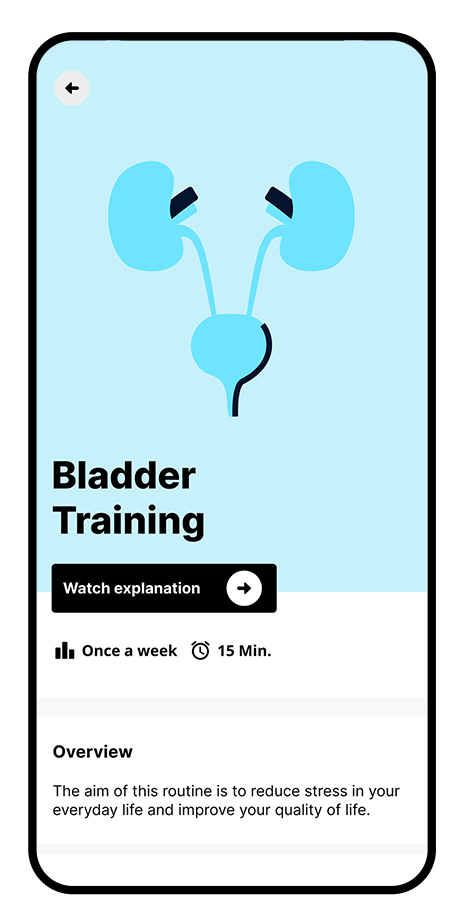
Bladder training
Behavioral therapy methods with the aim of increasing bladder capacity and reducing micturition frequency and urge to urinate
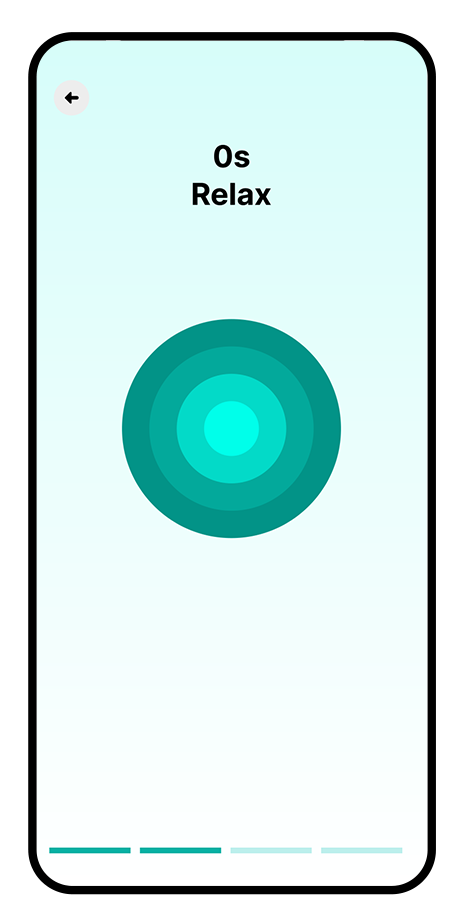
Pelvic floor training
Regular training strengthens the pelvic floor muscles, improving sphincter and bladder function, which in turn helps to control the urge to urinate
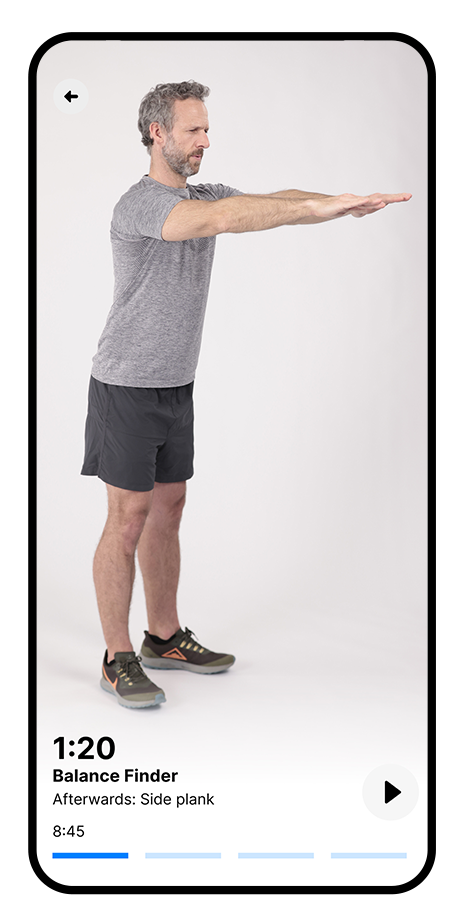
Physiotherapeutic training
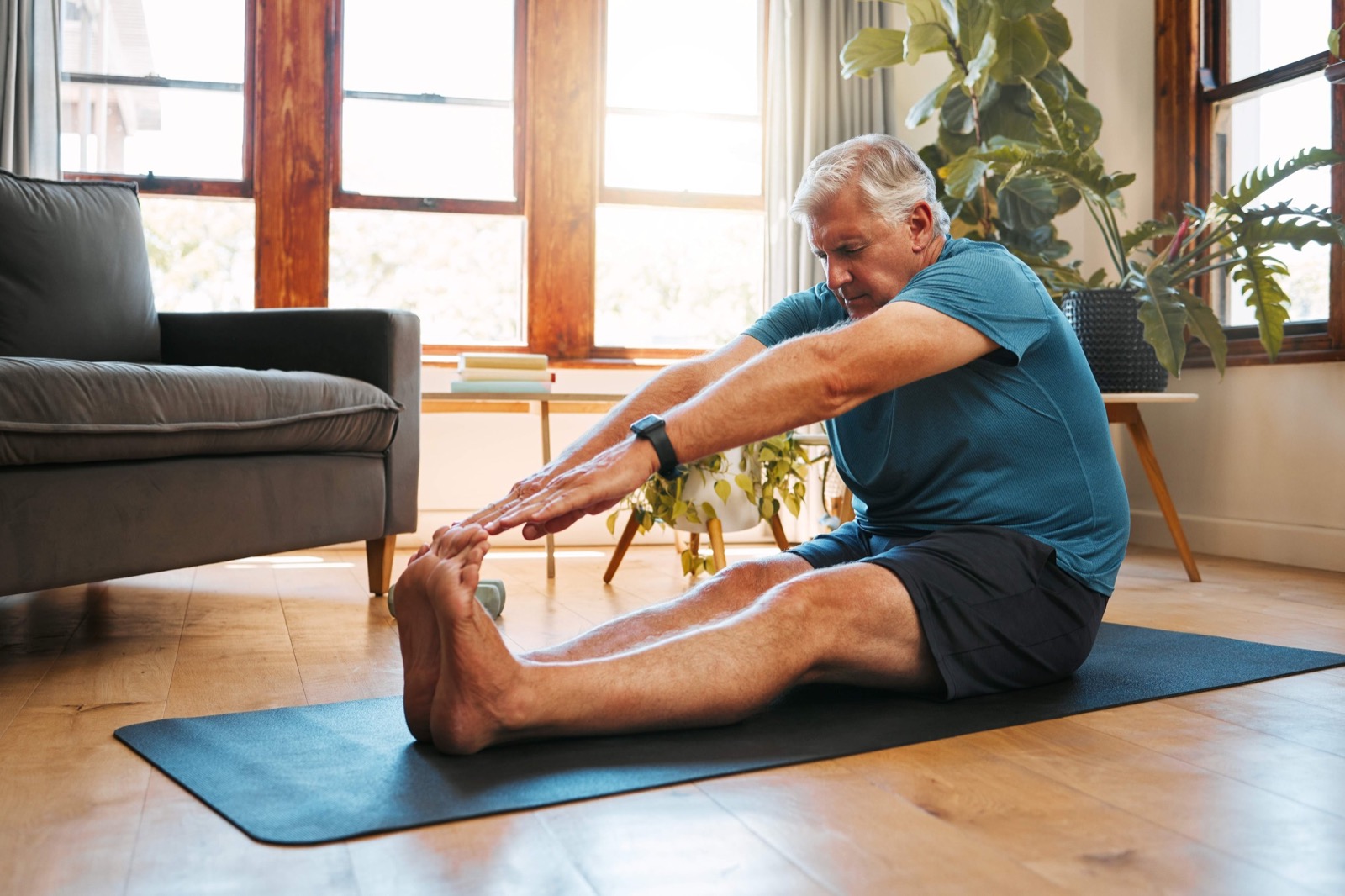
Weekly physiotherapy exercises increase cardiovascular fitness and complement pelvic floor training, which also contributes to better urinary control
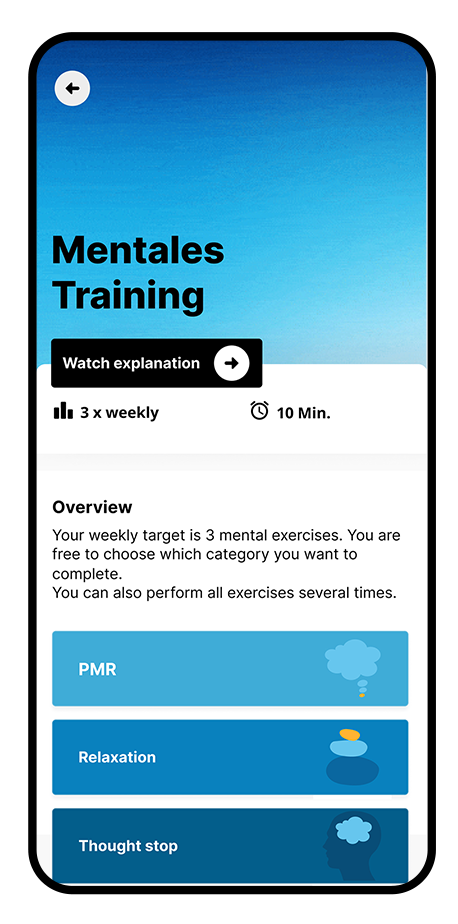
Mental training
Mental training with mindfulness and PMR (progressive muscle relaxation) helps with frequent urge to urinate by interrupting mental cycles and promoting relaxation
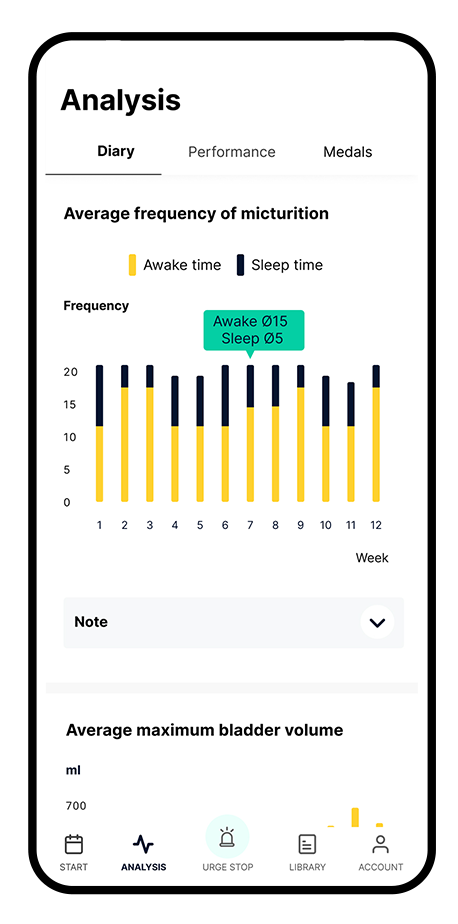
Training success at a glance
After each exercise session, your progress bar shows how close you are to your goal

Scientifically based

No costs for patients in Germany

Combinable with medication

Safe and certified
What our patients say about Kranus Lutera.

„Kranus Lutera is really great, the exercises are well explained. I felt a huge difference after just four weeks.“
- Markus, 73

„With Kranus Lutera, I don't have to go out at night as often and I'm no longer as stressed. It has really helped me to deal with my problem better.“
- Florian, 48

„The app makes me feel like I've been reborn. The pelvic floor exercises in particular have helped a lot. I'm really grateful for the support.“
- Noah, 56
Developed and recommended by doctors and medical experts.

Dr. Laura Wiemer
Chief Scientific Officer
Practicing urologist and former Charite doctor in urology and andrology

Prof. Dr. Kurt Miller
Chief Medical Officer
Former Medical Director of the Department of Urology at the Charité in Berlin

Prof. Dr. Ehsan Khaljani
Senior Advisor
Urologist and Head of the Digital Health Management program at Medical School Berlin

Prof. Dr. Christian Gratzke
Medical Advisor
Medical Director of the Department of Urology at Freiburg University Hospital

PD Dr. Sandra Schönburg
Medical Advisor
Deputy Clinic Director, Deputy Head of Uro-oncology centres, counselling centre of the German Continence Society University Hospital Halle (Saale)

Marc Katzenburg
Senior Advisor
Psychological Psychotherapist with practice for psychotherapy in Cologne

Jette Juhnke
Senior Advisor
State-certified physiotherapist specialized in the pelvic floor
Urinary urge control made easy!
Experience a significant reduction in the symptoms of frequent urination and enjoy an improved quality of life - effectively and digitally, anytime and anywhere.

Do you already know our therapy for erectile dysfunction?
We offer a targeted therapy program that focuses on effectively combating the causes of your erectile dysfunction.
We support you on the way to improved potency with individually tailored content that includes both physical and psychological factors.
Frequently Asked Questions.
What is Kranus Lutera?
With Kranus Lutera, we help men with LUTS to improve their symptoms and increase their quality of life. The aim is to reduce the urge to urinate, the frequency of urination and possible incontinence episodes through holistic therapy via an app.
Kranus Lutera was developed by experts in the field of men's health, is scientifically sound and is based on current medical guidelines.
What does the Kranus Lutera app provide?
The 12-week therapy takes a multimodal approach to treating your bladder voiding disorders. Kranus Lutera consists of various components, such as a bladder diary, also known in medicine as a micturition diary. Here, patients can record their drinking and urine volumes, among other things. Other therapeutic content includes integrated bladder training and pelvic floor training with associated physiotherapy components.
Patients can find mental exercises in the app to learn relaxation techniques and reduce stress. A knowledge section is also included. Here you will learn a lot about how the bladder works and about bladder diseases.
What is the IPSS-Score?
The IPSS score, also known as the International Prostate Symptom Score, is a questionnaire used to assess the symptoms of benign prostatic hyperplasia (BPH), a common condition in older men that involves enlargement of the prostate. BPH can affect urinary flow and lead to symptoms such as frequent urination, nocturia (urination at night), weak urinary stream, interrupted urinary stream (urinary stuttering), a feeling of incomplete bladder emptying and occasional urinary retention.
The IPSS consists of seven questions that relate to the frequency and severity of lower urinary tract related symptoms that have occurred in the past month. Each question is scored on a scale from 0 (no symptoms) to 5 (very severe symptoms), resulting in a maximum total score of 35. The total score of the IPSS is used to categorise the severity of BPH symptoms:
0 to 7 points: Mild symptoms
8 to 19 points: Moderate symptoms
20 to 35 points: Severe symptoms
In addition to the seven symptom-related questions, the IPSS also includes a quality of life question that asks patients how they feel about their symptoms on a scale from 0 (satisfied) to 6 (very dissatisfied).
What is the OAB-q-SF Score?
The OAB-q SF (Overactive Bladder Questionnaire Short Form) is a shortened questionnaire specifically designed to assess symptoms and quality of life in people with overactive bladder (OAB). Overactive bladder is a common syndrome characterised by symptoms such as sudden urge to urinate, frequent urination (more than eight times in 24 hours) and nocturia (urination at night), with or without urge incontinence.
The OAB-q SF is a simplified version of the more comprehensive OAB-q and includes questions focussing on symptom frequency and severity and associated quality of life. The questionnaire usually consists of two main sections:
Symptom Score: this section assesses the frequency and intensity of OAB symptoms. Questions may relate to the frequency of urination, the occurrence of sudden urge to urinate and the incidence of urinary leakage due to the urge.
Quality of life score: This section measures how OAB symptoms affect the person's quality of life, including social, emotional and physical aspects.
Each question in the OAB-q SF is scored on a scale, and the responses are summarised into an overall score that reflects the severity of symptoms and impact on quality of life. Higher scores indicate more severe symptoms.
What is micturition?
Micturition refers to the process of urination or urination. It is the process by which the body releases urine from the bladder through the urethra to the outside. Micturition is a complex process that requires coordination between the muscle of the bladder wall and the sphincter muscles at the bladder outlet.
The process typically begins with the filling of the bladder with urine produced by the kidneys and transported through the ureters to the bladder. When the bladder reaches a certain level of fullness, signals are sent to the brain, creating a feeling of urgency to urinate. The decision to urinate leads to relaxation of the external sphincter and contraction of the detrusor muscle, which forces the urine out of the bladder.
Micturition is a normal physiological process that occurs several times a day in healthy individuals. Disruptions in this process can lead to various urological problems, such as urinary incontinence, urinary retention or urinary tract infections.
What is the BEST-Study?
The BEST study represents an important milestone in urological research and aims to systematically evaluate the effectiveness of Kranus Lutera, a health app focussed on the treatment of Lower Urinary Tract Symptoms (LUTS). Led by Prof Christian Gratzke (University Hospital Freiburg) and Dr Sandra Schönburg (University Hospital Halle), this study will provide important insights into the use of digital health solutions for urological diseases.
Design and implementation
The BEST study is designed as a randomised controlled trial designed to collect objective and reliable data on the efficacy of Kranus Lutera. With 237 patients, it provides a solid data base to obtain significant results. Participants in the intervention group used the Lutera app as part of a multimodal treatment of their LUTS, emphasising the integration of modern technology into patient care.
Inclusion criteria and target group
The study is aimed at men over the age of 18 who have a smartphone or tablet with which they can use the Lutera app. The study focuses on patients with diagnoses such as prostatic hyperplasia (N40) or other specified diseases of the urinary system (N32.8).
How long does it take to start seeing results from Kranus Lutera?
We cannot say, as the measurement points are weeks 0 and 12. Patient feedback at 3 weeks.